Inside an NK1 Antagonist Journey: A Pharmacologist’s Perspective
Stories From The Bench with Mike Snider
In-depth conversations on discovery strategies, imaging innovation, and data-driven research.
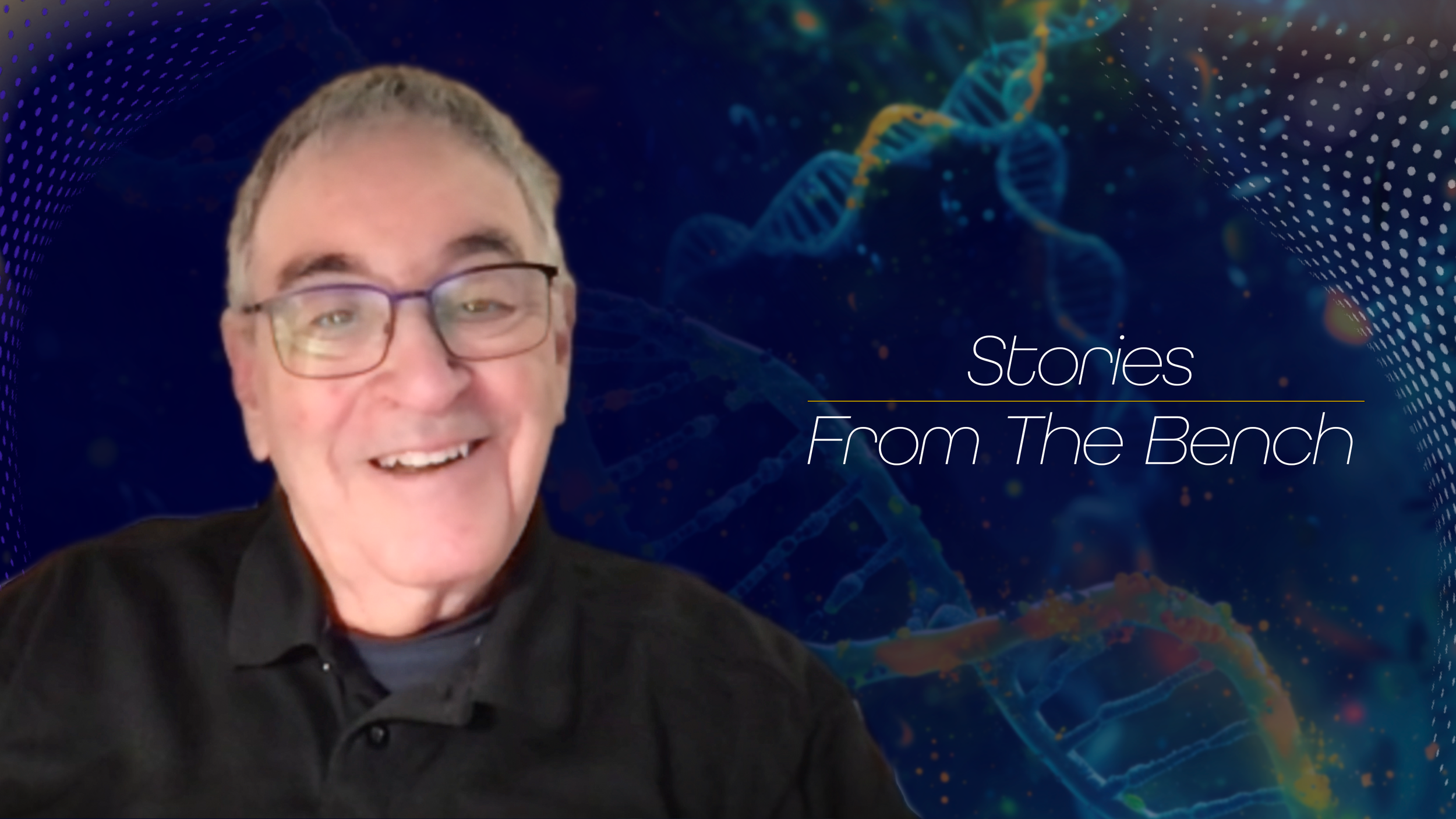
Mike Snider is a retired pharmacologist with decades of experience in early-stage drug discovery.
He earned his PhD in Pharmacology at Ohio State University and completed a postdoctoral fellowship at the Mayo Clinic, focusing on biogenic receptor systems.
At Pfizer, he played a central role in the NK1 receptor antagonist project, contributing to therapies that improve patient outcomes in chemotherapy and post-operative care.
-
Mike began his scientific journey at Ohio State University during a period of rapid transformation in pharmacology — combining classical techniques with emerging molecular approaches like receptor cloning and binding assays.
After earning his PhD, he completed a postdoctoral fellowship at the Mayo Clinic under Elliot Richelson, focusing on second messenger systems and the interaction of antidepressants and antipsychotics with biogenic receptors.His career path led him from academia to biotech and ultimately to Pfizer, where he was deeply involved in high-throughput screening and early lead discovery. Mike played a key role in the NK1 receptor antagonist project, later contributing to therapies addressing chemotherapy-induced and post-operative nausea and vomiting.
After Pfizer, Mike continued his work at Berlex before retiring.
Today, he shares insights from a pivotal era in pharmacology, reflecting on lessons learned and the evolving challenges in modern drug discovery.
From Discovery to Impact
In this episode of CELLIMA TALKS, Mike Snider shares insights from his work at Pfizer during the early discovery of NK1 receptor antagonists.
What began as an exploration into asthma, depression, and pain management evolved into a breakthrough therapy that has improved the lives of millions of patients worldwide.
🎥 Watch the full interview
The NK1 Journey – From Hypothesis to Therapy
Drug discovery rarely follows a straight path.
Mike recalls how the NK1 receptor project began with hypotheses around asthma and psychiatric disorders but unexpectedly became a cornerstone therapy for preventing nausea and vomiting in chemotherapy and post-operative care.
“Initially, we thought our NK1 receptor antagonist would be most useful for asthma, depression, or pain — but it turned out to be critical for preventing nausea and vomiting in chemotherapy and post-operative care.” — Mike Snider
This unexpected pivot highlights the unpredictable nature of drug discovery and reinforces the value of following the data over sticking to assumptions.
Key Lessons from the NK1 Story
1. Discovery Is Empirical
“Pharmacology is ultimately defined by antagonists — and by the fact that discovery remains entirely empirical.” — Mike Snider
Even in the era of AI-driven pipelines and machine learning, drug discovery remains grounded in experimental validation.
AI accelerates hypothesis generation, but biology still delivers the answers.
2. Collaboration Accelerates Innovation
“In many cases, collaborations with external partners were far more productive than working within internal silos. — Mike Snider
The NK1 project showed that breakthrough insights often emerge from cross-organizational partnerships rather than isolated research.
Innovation thrives where boundaries between institutions dissolve — a principle as relevant today as ever.
3. The Shift Towards Biologics
“Small molecules tend to be less specific, whereas the future increasingly belongs to highly selective biologics and protein-based therapies.” — Mike Snider
Mike’s observations reflect a broader industry trend:
Drug discovery is steadily shifting from small molecules to biologics and protein-based therapeutics — more precise, targeted, and increasingly supported by AI-driven design.
High-Throughput Screening – Repetitive Work, Transformative Results
High-throughput screening (HTS) was central to the NK1 project, enabling Mike’s team at Pfizer to test thousands of compounds with unprecedented speed and scale.
While the day-to-day process was highly repetitive and demanding, the outcomes were transformative.
“Running high-throughput screening day after day can feel repetitive and even boring — but the discoveries it enables are truly fascinating.” — Mike Snider
For more than three decades, HTS has been a cornerstone of modern drug discovery, enabling laboratories worldwide to explore millions of compounds efficiently and systematically.
Today, HTS continues to evolve — integrating machine learning, deep phenotyping, and AI-powered image analysis to accelerate discovery even further.
Watch the Full Interview
Discover more insights from Mike’s NK1 journey in the full CELLIMA TALKS episode:
🎥 Watch the interview now
Conclusion – Discovery Happens Where You Least Expect It
Mike’s NK1 story is more than a success case — it’s a lesson in adaptability: breakthroughs emerge where collaboration, empirical testing, and openness to data converge.
CELLIMA TALKS
In-depth conversations on discovery strategies, imaging innovation, and data-driven research.